


Precise measurement data directly from the hand
 The combination of sensors with portable handheld measuring electronics This brings laboratory precision directly to field use. As soon as tests leave the traditional testing laboratory, power cables, desktop PCs, and bulky measuring amplifiers that have to be dragged across the factory floor or construction site become a safety hazard and restrict mobility. This class of device delivers measurement accuracy without the limitations imposed by cables.
Interface's handheld displays, multi-channel Bluetooth data loggers, and wireless telemetry receivers can be directly coupled with Interface's force transducers, torque transducers, and multi-axis sensors. Because they combine power supply, bridge completion, analog-to-digital conversion, and direct display in physical units in a single compact package, these devices enable instant verification, fast in-device data recording, and wireless, continuous measurement data acquisition.
Configurations of Interface portable display devices
Interface's handheld measurement electronics combine integrated conditioning for strain gauge bridges, regulated supply voltage, and high-resolution analog-to-digital conversion in compact, battery-powered hardware. Instead of running long sensor cables to permanently installed data acquisition racks, technicians can connect force transducers, torque transducers, or measuring studs directly to a handheld device at the measurement point.
Thanks to pre-programmed sensor calibrations, tare functions, and fast data logging, operators can use handheld displays to check peak loads, monitor continuous force profiles, and diagnose mechanical assemblies even in confined machine spaces where benchtop devices won't fit. Whether for routine on-site verification, structural load testing, or troubleshooting on running machines, handheld devices deliver calibrated measurement data instantly – without cumbersome configuration.
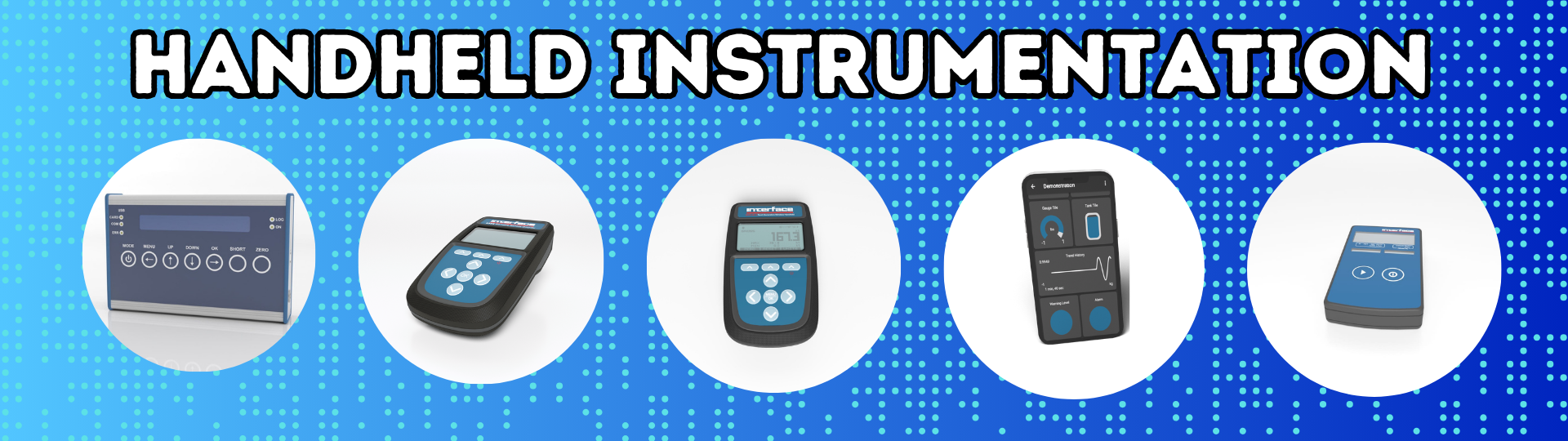
Designed for direct sensor connection via standard industrial connectors: The 9325 Portable Sensor Display and 9325-NU Portable Sensor Display series offer instant readout with memory for two calibration ranges, gross/net tare function, and battery operation. The 9330 Battery Powered High Speed Data Logging Indicator complements this with rapid data logging at up to several thousand readings per second directly to an SD card – for capturing transient and dynamic load profiles.
Among the battery-powered devices that can process 4 to 6 bridge inputs simultaneously is the 4850 Battery Powered Bluetooth Weight Indicator . It transmits load data in real time directly to tablets, laptops, or mobile devices – without any external data cables – making it ideal for multi-axis monitoring and distributed force verification.
Handheld transceivers communicate with Interface's WTS wireless transmitters via license-free 2,4 GHz radio. They are available for direct display of a single sensor, switching between multiple sensors, or summing the signals of an entire network of force transducers. The most powerful portable options are the Interface WTS-HK-S Next-Generation Wireless Handheld and the WTS-BS-1 Wireless Handheld Display for Unlimited Transmitters.
Complete systems with handheld measuring electronics from Interface
A precision force transducer is only as reliable as the signal chain to which it is connected. To eliminate integration uncertainties and signal mismatches, Interface offers fully integrated portable measurement systems that combine our high-precision sensors directly with handheld measurement electronics and accessories. Each complete system is factory-calibrated at the system level: sensor, cable assembly, and portable display unit are tested together as a single verified unit. This end-to-end calibration ensures NIST-traceable accuracy out of the box, avoids scaling errors in the field, and allows technicians to deploy the system with complete measurement confidence directly in the field.
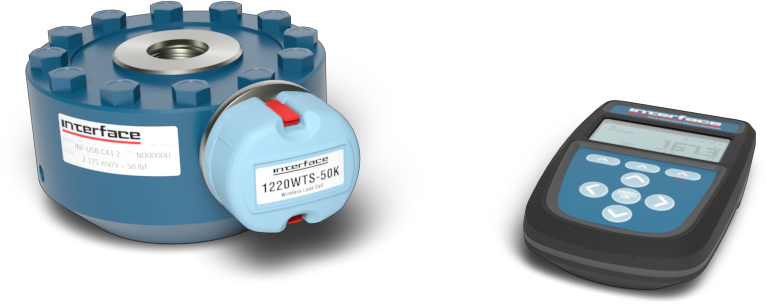
The 1200 Series Wireless Low Profile Load Cell and the WTS-HK-S Wireless Handheld These components are part of Interface's Wireless Telemetry System and enable portable, real-time force measurement without cables. The force transducer measures tensile or compressive forces and transmits the data wirelessly to receivers. The WTS-HK-S serves as both receiver and display: It shows live measurements, monitors multiple transmitters, and allows for configuration. Together, they form a compact, wireless system – ideal for field, testing, and industrial applications.
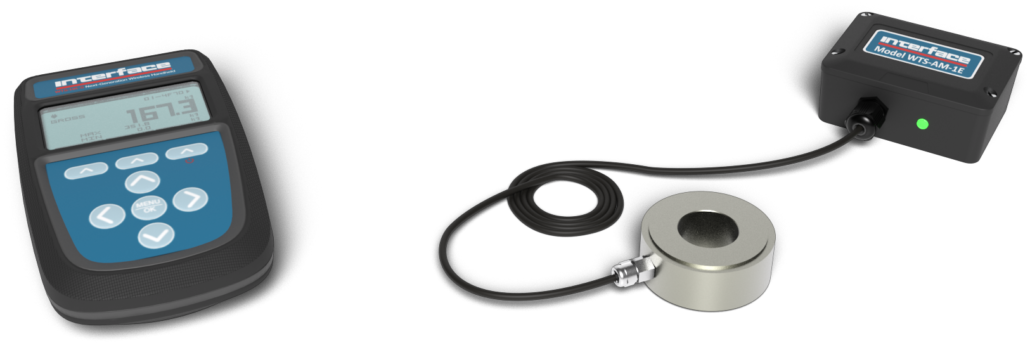
The LW General Purpose Load Washer Load Cell, in combination with the WTS Wireless Telemetry System, includes Interface's force-measuring washer, which detects tensile or compressive forces in bolted connections, fasteners, and load-bearing assemblies. Its mV/V output connects to the WTS-AM-1E Wireless Strain Bridge Transmitter Module, which converts the sensor signals into wireless telemetry data. The WTS-HK-S Next Generation Wireless Handheld then receives and displays the force measurements in real time – a portable system for load verification, structural testing, and field measurements.
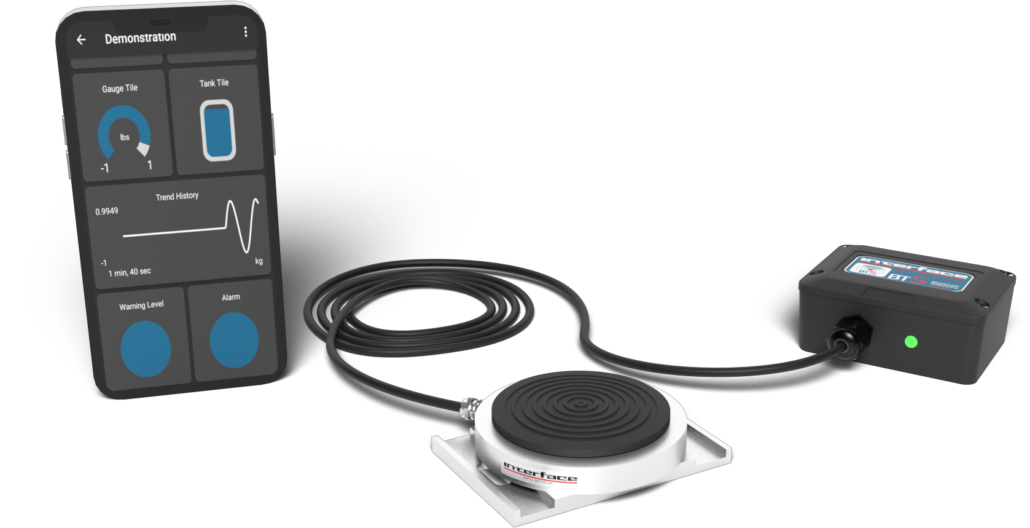
The BPL Pedal Load Cell in combination with the BTS Bluetooth® Telemetry System Enables precise, wireless measurement of pedal forces. The compact force sensor captures highly accurate data, which the BTS transmits to mobile devices in real time – ideal for simulation, testing, and remote monitoring without any physical connections.
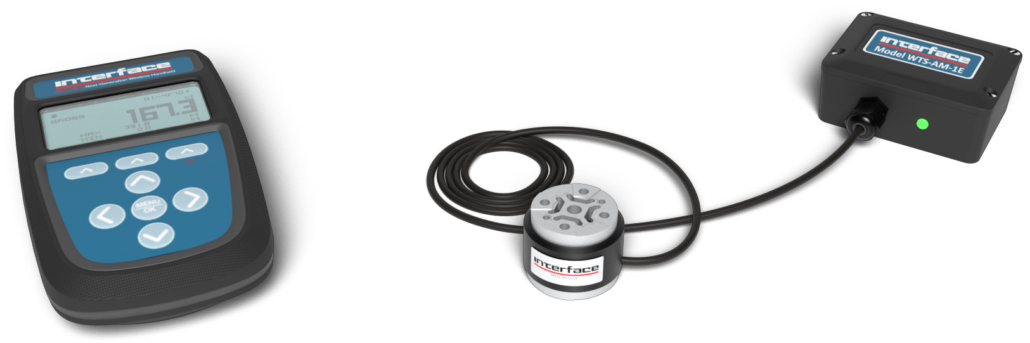
The MRI Miniature Flange Style Reaction Torque Transducer with the WTS Wireless Telemetry System This is an excellent combination for torque measurement. The MRT Miniature Flange Style Reaction Torque Transducer accurately measures static and dynamic reaction torques in small applications. Its mV/V output is connected to the WTS-AM-1E Wireless Strain Bridge Transmitter Module, which wirelessly transmits the data to the WTS-HK-S Next Generation Wireless Handheld – for convenient, real-time torque monitoring, testing, and process control.
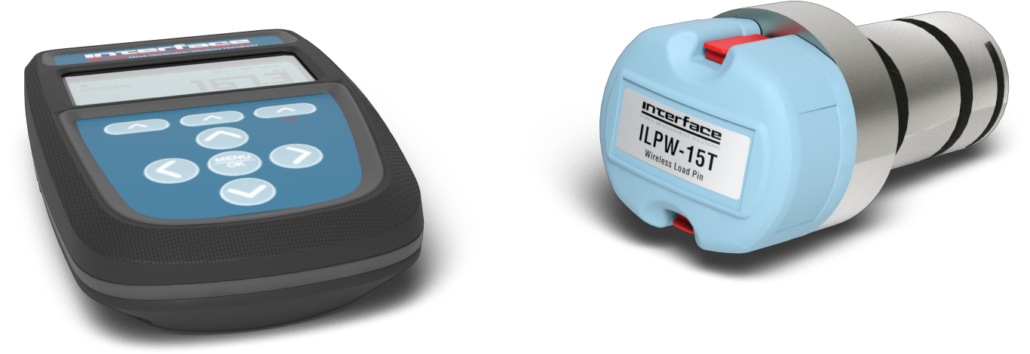
If you need immediate access to measurement data using a load pin, the ILPW Standard Wireless Load Measuring Pin and the WTS-HK-S Next-Generation Wireless Handheld are an excellent choice. The ILPW Standard Wireless Load Measuring Pin wirelessly transmits force data in real time to the WTS-HK-S Next-Generation Wireless Handheld, enabling seamless monitoring of multiple sensors from a single compact, portable control unit.
Practical examples of continuous load monitoring with handheld measuring electronics
Continuous load monitoring requires real-time data acquisition in operating conditions that rarely allow space for fixed measurement racks, external power supplies, or sensitive desktop PCs. Handheld measurement electronics provide bridge power, fast analog-to-digital conversion within the device, and integrated data recording directly at the sensor location—transforming static inspection routines into active, continuous diagnostic data streams. The following use cases demonstrate how handheld devices are used in production lines, aerospace facilities, and mobile calibration processes. However, they represent only a foundation: The same core architecture supports the continuous acquisition of force profiles in robotics integration, crane overload protection, dynamic web tension control, underwater structure condition monitoring, and any critical process where real-time mechanical feedback determines operational safety.
On-site press verification and tool setup
- Environment: Metal forming, powder pressing and assembly plants of the automotive industry.
- User: Manufacturing engineers, tool specialists and maintenance technicians.
- Application: High-tonnage stamping presses and press-fit stations are subject to mechanical drift, uneven tool seating, and press frame fatigue over time. Permanently installed machine sensors or PLC displays often lack the accuracy required to detect localized tool wear.
- The benefits of portable measuring electronics: Technicians place a flat force sensor in the tool area and connect it to a fast data logger such as the 9330 Since the device is battery-operated and records locally, the technician can capture peak forces, press curves, and continuous multi-point load profiles during idle strokes and in continuous stamping operation. This allows force symmetry on four-column presses to be checked without running cables to the machine's main control cabinet.
Structural load tests and ground tests before flight in aerospace
- Environment: Aircraft hangars, aprons and staging areas at launch ramps.
- User: Flight test engineers and structural testing technicians.
- Application: Monitoring lashing tensions, crane lifting limits for rocket stages, and primary control surface actuation loads requires continuous load monitoring at widely separated points. Long sensor cables cause signal noise, tripping hazards, and cable routing bottlenecks around moving aircraft components.
- The benefits of portable measuring electronics: By combining force transducers and measuring shackles with radio transmitters, technicians can monitor the mechanical load distribution via a wireless handheld display. WTS-BS-1-HA They monitor the aircraft fuselage, reading the current tensile forces at each point and monitoring the total on a single screen to ensure that no structural point exceeds the test load limits during tensioning.
Assembly of heavy machinery and center of gravity alignment (CoG)
- Environment: Assembly lines for heavy machinery, agricultural machinery manufacturing and shipyard docks.
- User: Those responsible for lifting and rigging technology, quality inspectors in manufacturing, and safety engineers.
- Application: Large assemblies such as combine harvesters, tracked mining vehicles, and underwater structures must be weighed and balanced before final assembly or transport. Uneven weight distribution leads to structural instability, bearing damage, or the risk of tipping over during lifting operations.
- The benefits of portable measuring electronics: Technicians position force transducers at multiple points under each jack or wheel hub and connect them to a WTS Next Generation HandheldThe portable device displays the individual corner loads along with the total in real time. The fitters adjust ballast or reposition components until the live displays confirm that the center of gravity is within the design tolerances.
Validation of packaging lines in cleanrooms and the pharmaceutical industry
- Environment: Cleanrooms for medical devices, aseptic blister packaging and areas for sealing pharmaceutical vials.
- User: Validation engineers, technicians on packaging lines and maintenance teams for automation.
- Application: Rotary capping machines for vials and sealing heads for blisters apply defined vertical sealing forces to ensure the integrity of the sterile barrier. In cleanroom environments, laying temporary power cables or setting up external PCs within the sterile area violates clean air requirements and complicates cleaning procedures.
- The benefits of portable measuring electronics: Technicians place a miniature or flat force sensor under the sealing heads and connect it to a handheld device. 9325 or connected to a wireless data logger outside the barrier zone. The technician makes quick mechanical adjustments to the line and checks whether each head applies exactly the target force over continuous cycles before the production batches start.
Three points for implementation
Choose a portable measuring device for continuous data acquisition that suits your operational requirements:
- Sampling rate vs. battery life: Standard display units like the 9325 are designed for long battery life for spot checks throughout an entire shift. If your process requires capturing rapid shock loads or short press-fit peaks, choose a high-speed data logger like the 9330, which supports kilohertz-range data acquisition.
- Number of channels and synchronization: For single-point measurements, dedicated handheld displays reduce setup time. When balancing platforms or testing multi-axis devices, multi-channel data loggers ensure that all load vectors are sampled at the same moment – thus avoiding phase shift errors during dynamic tests.
- Protection against environmental influences: In field use, measuring instruments are exposed to dust, moisture, and temperature fluctuations. Check whether the housing protection rating, cable glands, and connectors meet the requirements of your operating environment.
The most important information about switching to handheld measuring devices
Handheld and portable measuring electronics replace cumbersome benchtop setups with battery-powered displays, multi-channel data loggers, and long-range wireless receivers that process signals directly at the measuring bridge. Whether on industrial stamping lines, during aircraft ground tests, on-site calibration, machine balancing, or in regulated cleanrooms: these tools enable technicians to acquire traceable, rapidly acquired measurement data from force transducers directly at the point of use. The right combination of sampling rate, channel capacity, and wireless telemetry eliminates cable management issues while ensuring measurement integrity outside the laboratory.